
Are Your Childhood Money Stories Controlling Your Bank Account?
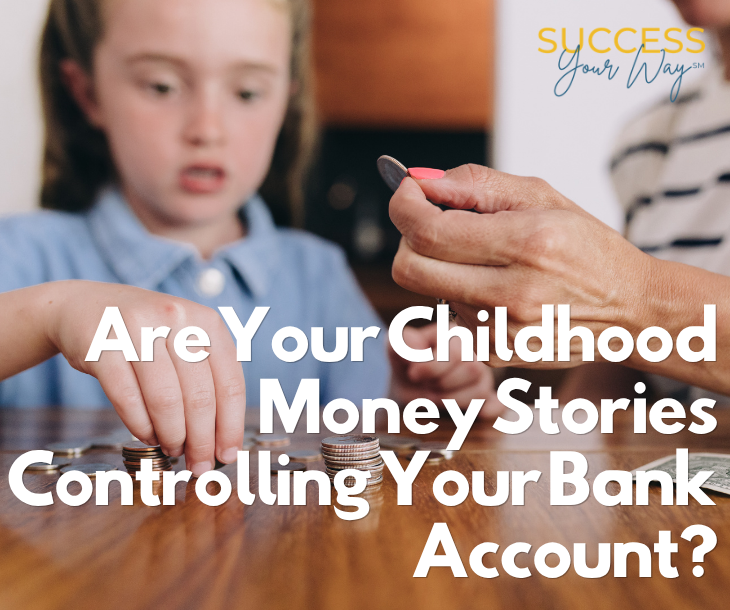
You probably learned about money long before anyone taught you how to balance a budget, open a retirement account, or understand a credit score.
You learned by watching.
For many of us, money was a constant source of stress in our homes. Or parents argued about bills or disagreed on what expenses were worth the money. Maybe you heard things like, “We can’t afford that,” “Money doesn’t grow on trees,” or “People like us don’t have that kind of money.” Or maybe no one talked about money at all.
Those early experiences can become what we call your money story: the collection of beliefs you carry about what money means, how hard it is to get, what you’re supposed to do with it, and even whether you deserve to have it.
The problem is that many of us are still living with our childhood money stories decades later without realizing it.
Your First Money Lessons Weren’t Really About Money
As a child, you absorbed what was happening around you without the context needed to really understand your family’s financial situation.
If money was always tight, you may have learned that there is never enough.
If your family lost money unexpectedly, you may have learned that financial security can disappear at any moment.
If spending was how your family celebrated or showed love, you may associate buying things with happiness and connection.
If you watched someone work constantly to make ends meet, you may believe that earning more money always requires working harder.
These lessons can become so deeply ingrained that they stop feeling like beliefs. They start feeling like facts.
How Your Childhood Money Shows Up Today
Your financial habits today may make much more sense when you look at where they came from.
Someone who grew up experiencing financial instability might become extremely cautious with money. She could have plenty saved and still feel anxious every time she spends it.
Someone who grew up feeling deprived might finally start earning good money and think, I work hard. I deserve this. That can make it difficult to say no to purchases, vacations, dinners, or experiences—even when they interfere with bigger financial goals.
Someone who grew up in a family where money was never discussed may avoid looking at bank statements or credit card balances because dealing with money feels uncomfortable.
And someone who watched her parents constantly sacrifice for everyone else may grow into an adult who feels guilty spending money on herself—or saying no when other people ask for financial help.
The habits and behaviors look different, but the problem is the same. These people are using a childhood understanding of money to make today's financial decisions.
Sometimes Your Money Story Looks Like Success
Unhealthy money beliefs don’t always result in overspending or debt. In fact, sometimes they look incredibly responsible from the outside.
You can save aggressively because you’re terrified there will never be enough.
You can obsess over your accounts because having control makes you feel safe.
You can work far more than you need to because slowing down makes you nervous.
You can have a healthy bank account and an unhealthy relationship with money. Financial wellness isn't only about how much you have; it's also about how you feel about what you have.
If reaching one savings goal immediately makes you worry about the next, the problem may not be the number in your bank account. It may be the story telling you that no number will ever be enough.
Your Money Story Can Follow You Into Business
For entrepreneurs, these beliefs can become even more powerful.
If you were taught that wanting money is greedy, you may struggle to charge what your work is worth.
If you believe money comes only from hard work, you may have trouble delegating because earning more without doing more yourself feels wrong.
If financial uncertainty frightened you growing up, you might avoid investing in your business even when the investment makes strategic sense.
If you associate being a “good person” with generosity, you may give discounts nobody asked for, undercharge clients, or have trouble enforcing payment policies.
Your money story doesn't stay neatly inside your personal checking account. It can influence how you price, hire, invest, negotiate, sell, save, and grow.
You Don't Have to Keep the Story You Inherited
Understanding where your beliefs came from doesn't mean blaming your parents. After all, they were also victims of an unhelpful story. Most people simply teach the next generation what they learned from the generation before them. Your parents had money stories inherited from their parents, and so on.
But you get to decide whether those stories continue.
Start noticing the thoughts that appear when you make financial decisions.
I can't afford that.
I should save this just in case.
People will think I'm greedy if I charge that much.
I deserve to buy this.
I could never make that much money.
Once I have a little more saved, I'll finally feel secure.
Instead of immediately believing the thought, get curious about it.
Where did I learn this?
Then ask an even more important question:
Is it still serving me?
Meet Your Money Monster
At Success Your Way, we call the emotional patterns that influence your financial decisions your Money Monster. Your Money Monster isn't necessarily trying to sabotage you. In many cases, it's trying to protect you using lessons you learned a long time ago.
But you're not a child anymore.
You can look at your finances with new information, new resources, and a completely different understanding of what money can do in your life.
Changing your financial future isn't just about learning how to budget better or earn more. Sometimes the most important work is understanding why you make the money decisions you make in the first place. That's where real change can begin.
Which Money Monster Is Running Your Financial Life?
Are you an Avoider? An Overgiver? A Retail Therapist? A Control Freak? Or is another Money Monster influencing the way you spend, save, and think about money?
Because you may have inherited your first money story—but you get to decide how the next chapter goes.